

The Wim Hof method WHM, developed over decades by Wim also known as,”The Iceman,” is known for his breathing techniques, cold water therapy, ice baths and breaking countless world records. I am a great fan of him and practice most of his techniques and they work very well for me. So I’m going to talk about the mechanism and what really happens in the body when you do that type of breathing and when you do ice baths so that when you understand the mechanism then you can adapt the method to fit your lifestyle as I have and you can get all or most of the benefits without having to become an Iceman, unless of course that your idea of fun.
The WHM Wim Hof Method according to the Founder Includes three things breathing, cold therapy, and mind Focus. the Wim Hof breathing starts out with 30 power breathes and this is where you breathe in as much as you can and then you blow it all out as much as you can. You keep doing this rather forcefully. You go very powerfully on purpose and what might happen is that you may get dizzy or light-headed and you might even pass out. So it’s a good idea to lay down or be in a recliner where you are not going to fall anywhere if you actually pass out. Never do this in water, in charge of machinery or a vehicle. Then when you’ve done these 30 power breathes, you blow all the air out, exhale and hold. And you do that for as long as you can, when you can’t hold your breath anymore, you take a deep breath in and then you hold it 15 seconds that is one round, then repeat this up to 5 to 10 rounds. I love it and as Wim says, ” Get high on your own supply.”
SNS & PSNS in the ANS!!
To understand anything about the WHM we need to understand the Autonomic Nervous System ANS because Wim Hof has been known to control his ANS by will and this is the part of the nervous system that controls the things you don’t have to think about normally, so blood pressure, digestion, muscle tone and so forth. They are at a certain level, automatically and these functions are managed for you and there are two branches, sympathetic and parasympathetic nervous system SNS & PSNS this is like a seesaw, when everyone goes up the otherside goes down same as when you’re driving a car you cannot speed up and slow down at the same time. You have to pick one and this is hardwired into your nervous system that they’re going to alternate. This is your resource allocation system, the sympathetic is going to allocate resources to defend you. This is called this fight, flight system, it’s your alarm system if you’re standing in the street and a car comes rushing up or if you’re in the woods somewhere then a bear comes running up to you, you’re in an alarmed state, your body is going to mobilise resources, it is going to increase heart rate, increase blood pressure, to pump more blood, it’s going to increase muscle tone to get you ready to get out of there as quickly as possible. It is also going to increase stress hormones like adrenaline and cortisol to raise blood sugar and mobilize energy. Everything about the sympathetic nervous system is about focusing outwards that if there’s a threat out there you have to defend yourself against that threat first so you can survive before anything on the inside makes sense. An interesting thing to know is that everytime that you breathe in your heart speeds up and the only time the heart speeds up when there is sympathetic activation; therefore your breathing is tied to the balance of your sympathetic and parasympathetic nervous system.
So we are going to talk about how this fits in with the different breathing patterns and parasympathetic obviously is the opposite it is known as the feed breed or rest digest System it does the opposite it lowers blood pressure, lowers heart rate lowers stress hormones and it’s involved with inside functions like Digestion, the immune system, reproduction and sex. Now of course this is about directing resources inwards, so you can pretty much if you understand how this balance works then you can allocate resources inside to heal or you can allocate resources outside against the outside to defend yourself, but you can’t do more of both at the same time, the seesaw principles can make the nervous system pick one or the other. Of course when you breathe out now your heart rate is going to go down and this makes a lot of sense because the body is smart when you breathe in there is more air in the lungs, more oxygen to be absorbed and therefore it makes sense to speed up the heart and send more blood there to pick up the oxygen when there’s more of it there and then when we breathe out, we don’t want to waste our energy, waste our resources so the heart slows down this is called heart rate variability.
I have talked about breathing in the past and after that people always ask me which kind of breathing is the best because I’ve heard about different kinds of breathing that are different than yours, so it’s not that one is bad and another one is good. It’s that they are different and once we understand what’s happening with his breathing method now we can kind of understand when and how to do it, so the breath I usually propose is an even 5 seconds in and 5 seconds out, maybe a little longer on the out breathe and here’s why.
Most people shallow breath
Most people breathe in for 2-3 seconds and then breathe out really fast and then breathe in for 2-3 seconds and out really fast. So with the in breathe they are activating their sympathetic nervous but breathing too fast to allow that parasympathetic nervous system to kick in and balance out the sympathetic so most people get stuck in that state of stress and anxiety and of course the anxiety makes you breathe even faster so you are sort of stuck in a vicious cycle there;but if you allow 5 or 6 seconds to breathe out you’re allowing the parasympathetic to kick in and balance the sympathetic that’s the purpose of this particular breathe, to balance the autonomic nervous system and bring you in a state of relaxation.
Two things happen when you breathe first you take oxygen in and also you take carbon dioxide out the thing about carbon dioxide is that it’s acidic so this is a way that the body can regulate pH of the blood if you don’t breathe enough then the carbon dioxide builds-up and your blood gets acidic and this is actually the trigger for your body to breathe more. There’s a sensor in your brain stem that says your blood is too acidic breathe more and this is a much stronger influence actually than the oxygen need. Now when you breathe in balance like this the purpose is to create balance also known as homeostasis. When they measure heart rate variability when they measure the pattern of how the heart rate increases and decreases with the breath, when you get into a perfect smooth and rhythmic pattern it is called, coherence and that is a very healthy place to be. That means that your brain and your heart are working together they are cooperating in harmony. This kind of breathing is also very relaxing obviously and when you do it and you stay within these relaxed physiological parameters than the body is going to regulate the PH and the CO2 and O2 and put them all within optimal levels.
WHM Breathing
Then what about the wim Hof breathing, well it is not a relaxed breath you breathe in as much as you can and out this much as you can and repeat 30 times and often times you get dizzy or even faint so this is a forced breathing, it’s unbalanced, it is stressful, unnatural and what happens now is because you’re forcing the breathing you’re blowing off way more carbon dioxide than your body calls for, so you are artificially bringing your PH up, your making your blood alkaline, this is why you get dizzy and light-headed at the same time you’re CO2 levels go down and your oxygen levels go up, then once you are done with 30 breathes and you blow out and you hold, now your body is really alkaline, your blood is really alkaline and because it’s the CO2, the acid CO2 that makes you want to breathe that gives you that air hunger you are not going to have any air hunger when your blood is alkaline, so it’s very easy to hold your breath it might be 30-40 seconds before you have any urge to breath and you might be able to hold this for quite sometime. Then of course you alternate breathing in and breathing out but whenever you’re holding your breath you are increasing growth hormone. They have done studies on this, they have taken people just have them hold their breath for as long as they can repeat a few times and their growth hormone levels increase.
Cold therapy
Cold therapy is it something that you can practice from the discomfort of your own home? I added the discomfort Part because I don’t know about you it may or may not be your idea of comfort however. It is an extreme stress. It is an increase. It’s a powerful massive increase in sympathetic drive. It causes vasoconstriction and it has your blood pressure shoot through the roof you could probably if you managed to measure it right in that moment it would probably be 200- 250 something like that. Anytime you shock your body or stress it significantly the body is also going to make growth hormones so that it can adapt. Now that we understand a little about the breathing and the cold therapy and what really happens in the body the next question is.

Stress
Is this actually a good thing? Well we have to start understanding a little bit more about what stress is and what it does and the different types. Short-term physical stress is very very normal. This is when you have to get out of the way from the car this is where you respond to something physical you defend yourself you do a workout you have a physical strain of some sort and now it’s adaptive, that type of stress is adaptive it gives your body a chance to adapt and get better for when it’s going to happen next time. Therefore it’s very healthy and it’s very constructive. It gives the body a reason to improve so now if we understand these parts, then we also see that it’s necessary because if you don’t have these if you don’t have this short-term physical stress then you’re not giving your body a reason to adapt. You’re not giving it a reason to get better and in one word that’s called degeneration but the other kind of stress is destructive.
That’s The Chronic stress we are designed for short-term physical stress, but chronic stress is the stuff that we can’t bounce back from because it just goes on and on. A lot of the stress is emotional and if we have anger or anxiety, depression or worry or fear then these are emotional habit patterns that break us down. We can also have excess physical stress and even though exercise is necessary and hugely beneficial if we do too much then it breaks us down. Exercise is break down and when we recover, when we rest we allow the body to build back up, but if we work out too much we don’t allow enough time to the next workout now we are just adding insult to injury and we break the body down more and more. So this chronic stress we’re not designed for it abnormal. It’s maladaptive, unhealthy destructive and in the case of emotional stress these are habitual patterns that we create and just like you can create a skill of any kind you can create a language skill or the skill of catching a ball. These are neurological patterns they work for you, but they also work against you in the case of negative emotions like anger and fear. Wim Hof talks about the mind also and that’s an important aspect and it takes a certain amount of dedication and commitment determination to jump into that ice water. So you have to sort of Focus your mind first you have to make a commitment and then once you jump in this is a massive sensory input, you are firing off all types of receptors and pathways and hormonal responses so massive sensory input. It’s a type of shock and when you do that in an extreme form it increases your focus, you going to jumps into that ice water and you’re not going to think back. I wonder if I remember to feed the dog before I left or worry about what I’m going to do later on today. You’re not going to do that, you are going to be right here right now you going to be present in the moment. You are going to be focused on what’s going on in the ice water and that improves your focus which is a good thing. Frontal lobe activation and the frontal lobe It’s like a muscle you workout muscles with weights you work out the frontal lobe with signal stimulation and then once the frontal lobe is activated and strengthened it actually get better at inhibit that sympathetic nervous system and the stress response. one way of thinking about it is also like a rubber band if you really wanna relax a muscle it can help to contract it first and then notice and accentuate the contrast this sort of works the same way, were you jumping the ice water and you really fire off that sympathetic, but then that makes it easier to notice the contrast and relax so you can get a rebound parasympathetic response. There are several benefits you have a pattern interrupt and this is very very powerful that most of our health problems, most emotional problems is because we get our pathways, we get our nervous system stuck in certain pathways and certain patterns. One of the most powerful things you can do is to interrupt that pattern, make the nervous system just do something else, anything else at all is good and you also get hormonal bursts, you activate survival circuits you have survival jeans and if you expose your body to something harsh then the purpose of these survival jeans is to help you through that crisis that harsh period. So the short-term you make adrenaline which is a stress hormone, but as soon as you get out of the water that adrenaline is going to go down very quickly but instead you have a long-acting benefit from the human growth hormone that decays that has a much slower Half-Life. You also get the brain stimulation which is like a workout for your brain and it helps you get even more calm after. There are a lot of clear benefits of doing this method. You understand the benefits now. I’m sure you are wondering do I have to do all of that? How much do I have to do? Do I have to become an Iceman to get these benefits?
Stimulate The sympathetic nervous system
Let’s talk about it. If it thrills you then I think you should be an Iceman. If you really get a kick out of walking on coals, jumping out of airplanes and sitting in ice water and you can look back, feel good about the fact that you did that and that’s an added benefit. So if that’s your personality then go for it. The only thing I want to point out is about your particular health State and the duration. Because when it comes to the ice bath for example they talk about starting off with 30-60 seconds or maybe working up to 15 minutes. As humans we tend to think if a little bit is good then more has to be better, but that’s not really how it works as we saw with our discussion on stress before that our bodies are design for short stress that what creates the trigger, the body gets to the point and then it makes the changes so I’m not convinced that 15-minutes is better than 60 seconds ok? This is my opinion. I don’t know that anyone has really studied this but the other part is that if you’re not super healthy if you have a weak heart, weak adrenals you can get in a lot of trouble you could actually trigger a heart attack. If you have a weak heart and you jump into ice water, It’s like lockdown all of your blood vessels and it’s like the heart is trying to pump against concrete and a healthy heart can handle that, a weak heart might not. Same thing with adrenals a little bit might be good might be just like a little stimulation, but if it goes on and on and on now you might actually sort of whip those adrenals beyond the point of health. So if you like doing this and you’re healthy I would say go for it. There’s certainly benefits.
What if we’re not looking forward to the next time we plunge into the ice water then we have other alternatives that in my opinion can probably create most if not all the benefits. Fasting is the single most powerful way to create growth hormone and the longer you fast the more growth hormone you make. Fasting alone is not going to get you fit. It’s not going to stimulate your brain tremendously even though it has benefits so you always want to do more than one thing an high-intensity interval training HIIT, is an excellent way to stimulate your brain to create more growth hormone, to challenge these survival circuits and these adaptive circuits.
Wim Hof breathing is an excellent idea. I think it’s a good addition but again understand why you are doing it. It’s stressful and again I don’t think that more is better, but I would use it as an introduction as a warm to a relaxing breath. You do the power breath with the WHM, you can do some breath-holding if you like, but then you sit down and relax because now you have stirred things up. You are in a very receptive state for your body to relax and now you do that 5 seconds in and 5 seconds out and you allow your nervous system to get back into homeostasis and create some long-term neural plasticity.
When it comes to cold therapy it turns out that both hot and cold will produce growth hormone. It will stimulate your own autonomic nervous system ANS It will shake things up. So if you don’t like the ice baths You could just alternate warm and cold showers, so have your shower and then at the end of it you turn up the heat a little bit and then you turn on the cold and you just do that back and forth a little bit and you have created a lot of the same effects. Now the Scandinavians, the Finns and Swedes have known this for centuries. They have something called the sauna.
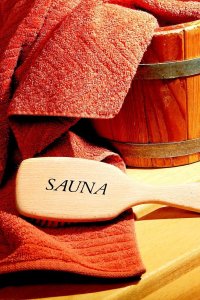
A very hot place you throw on some logs on the fire and you create tons of heat and steam. You sit there and roast and that heat is quite effective, but then if you go outside and you jump in ice water or in a cold shower now you accentuate the effect of the contrast and here is the interesting thing for those who have the facilities and the availability to do this I strongly suggest to do a sauna and then jump into really cold water or ice water and you’ll be amazed because it’s not going to feel cold. When you are really really hot and you create that contrast for the first 5 to 10 seconds your body does not know what’s happened. It does not feel cold, 10 seconds into it you start feeling cold, but it’s not really unpleasant because you were so hot so you don’t have to freeze to get the benefits. You just have to create the contrast and then you jump out of the ice water and you stand there after a minute and it feels really nice and warm your steaming of your skin, you look like a red Lobster but you’re feeling so peaceful and so wonderful so if you have a chance give it a try if not just work with it in the shower.
Stay happy, strong and healthy. Always listen to your body and before you try anything new check with your GP first.
 A better way