
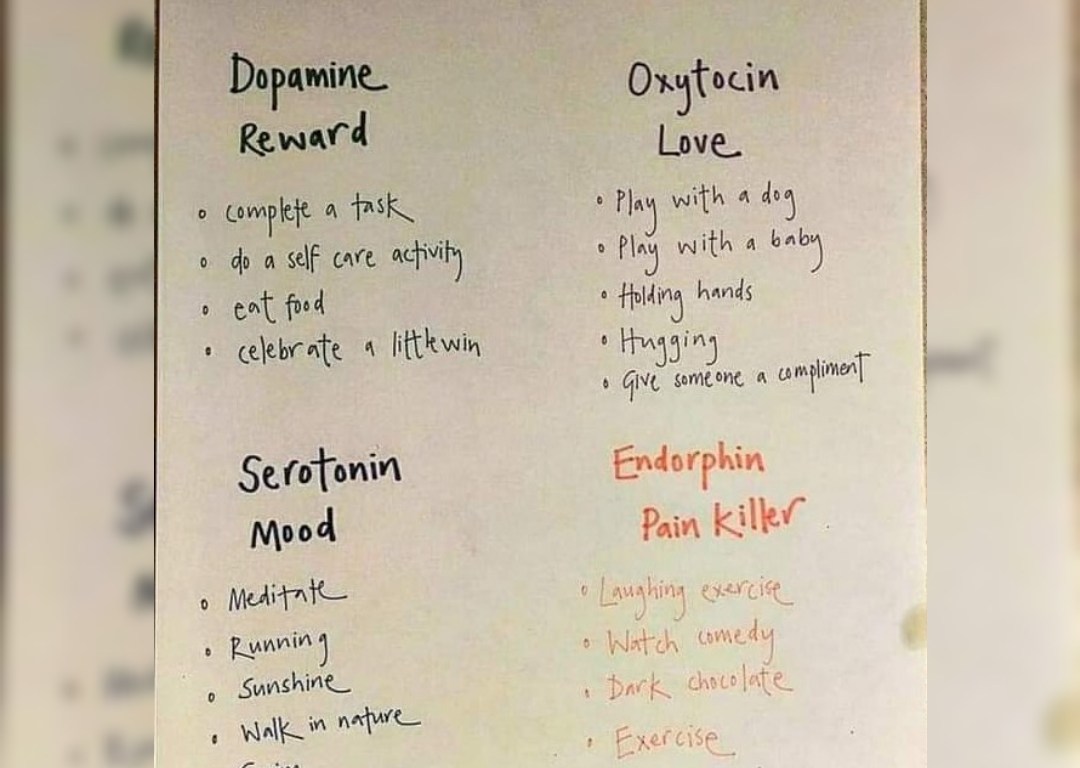
This article is inspired by the image I found on Facebook and I simply love it. Therefore I decided to dig deeper into all of these hormones so that I and you can learn more about them with the goal to ensure I and you are doing what we can to take ownership of our own mental and physical well-being.
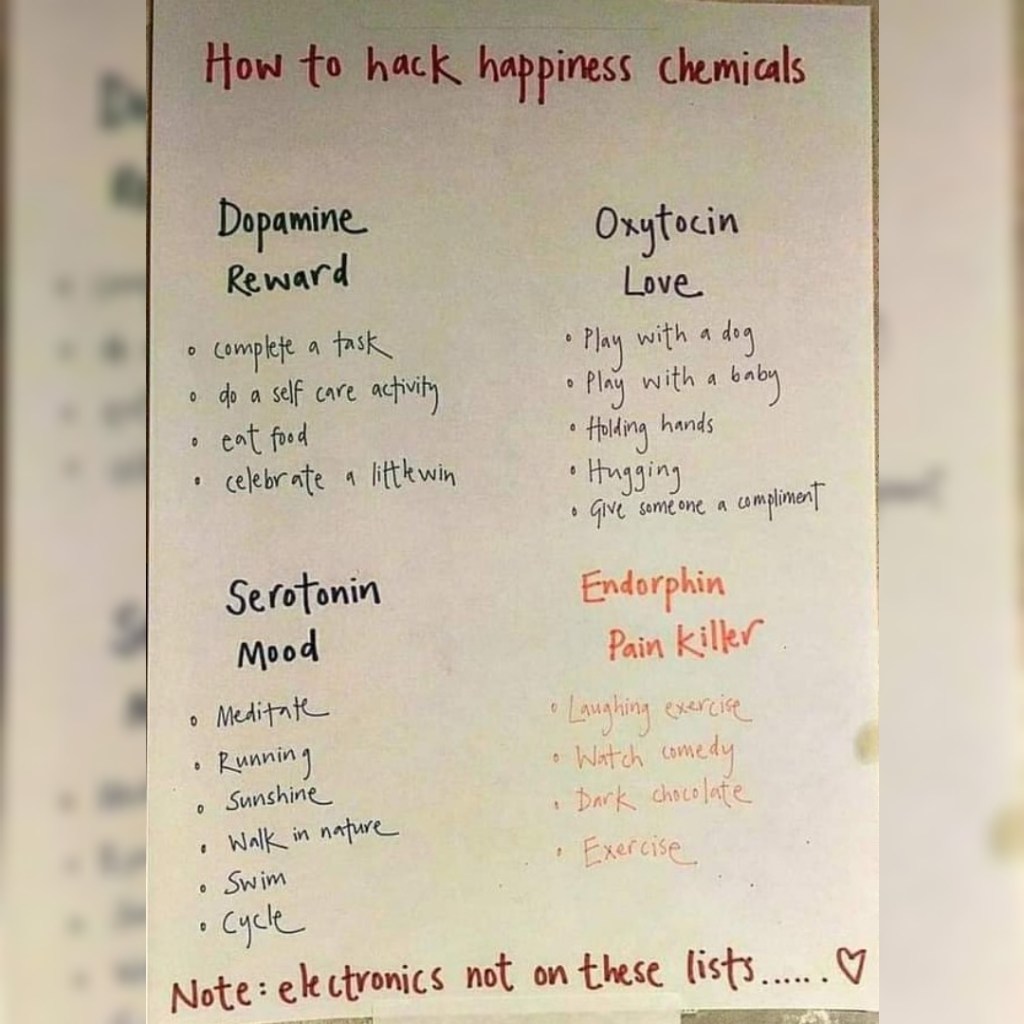
Dopamine Reward
- Complete a task.
- Do a self care activity.
- Eat food.
- Celebrate a little win.
Dopamine is most notably involved in helping us feel pleasure as part of the brain’s reward system. Sex, shopping, smelling homemade baking in the oven — all these things can trigger dopamine release, or a “dopamine rush.”
Dopamine also plays a role in these functions:
- learning and attention
- mood
- movement
- heart rate
- kidney function
- blood vessel function
- sleep
- pain processing
- lactation
Dopamine is a type of neurotransmitter find out more in this blog post
Serotonin Mood
- Meditate.
- Running.
- Sunshine.
- Walk in nature.
- Swim.
- Cycle.
When you pedal your bicycle or lift weights, your body releases more tryptophan, the amino acid your brain uses to make serotonin. This boost in serotonin (along with other endorphins and other neurotransmitters) is why many people get that feeling of euphoria known as a “runner’s high” after an intense workout.
Serotonin can stave off depression and provide a feeling of euphoria.
When you feel happy and all seems right with the world, you’re feeling the effects of serotonin. This hormone is responsible for boosting mood, as well as a host of other functions.
Serotonin is the key hormone that stabilizes our mood, feelings of well-being, and happiness. Find out more in this blog from the Hormone Health Network
Oxytocin Love
- Play with a dog/pet.
- Play with a baby.
- Holding hands.
- Hugging
- Give someone a compliment.
Oxytocin can help us bond with loved ones and can be released through touch, music and exercise.
Oxytocin is a hormone that’s produced in the hypothalamus and released into the bloodstream by the pituitary gland. Its main function is to facilitate childbirth, which is one of the reasons it is called the “love drug” or “love hormone.”
Just the simple act of touch seems boost oxytocin release. Giving someone a massage, cuddling, making love, or giving someone a hug leads to higher levels of this hormone and a greater sense of well-being.
Find out more about Oxytocin in this blog from The Hormone Health Network
Endorphin Pain Killer
- Laughing.
- Watch comedy.
- Exercise.
- Dark chocolate.
Endorphins are the body’s natural painkillers. Endorphins are released by the hypothalamus and pituitary gland in response to pain or stress, this group of peptide hormones both relieves pain and creates a general feeling of well-being.
How to release endorphins
- Exercise. A moderately intense pace, whether you’re walking fast or doing another form of aerobic activity, seems to be best for releasing endorphins.
- Acupuncture. An effective way to release endorphin is with pressure points. Placing fine needles into the skin at specific points around the body triggers the release of endorphins.
- Meditation. Breathing deeply and focusing your brain calms your mind and eases pain.
- Sex. These hormones are the reason for that blissful feeling many of us get after having sex. Experts believe that endorphins promote the release of other hormones that are involved in feelings of love.
- Playing music. When you sing, dance, or bang on a drum, you do more than entertain others. You also release a rush of endorphins, which research suggests might increase tolerance to pain.
- Laughter. A good belly laugh can do wonders for your state of mind. Along with releasing endorphins, laughter alters levels of serotonin and dopamine.
- Ultraviolet light. It’s no wonder that some people feel happy when they spend time outdoors in the sun. Ultraviolet light stimulates the release of beta-endorphins in the skin.
Endocrine System
Endocrine systems, also referred to as hormone systems, are found in all mammals, birds, fish, and many other types of living organisms. They are made up of:
- Glands located throughout the body;
- Hormones that are made by the glands and released into the bloodstream or the fluid surrounding cells; and
- Receptors in various organs and tissues that recognize and respond to the hormones.
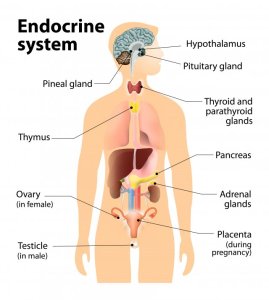
Hypothalamus – The hypothalamus links our endocrine and nervous systems together. The hypothalamus drives the endocrine system.
Pituitary gland – The pituitary gland receives signals from the hypothalamus. This gland has two lobes, the posterior and anterior lobes. The posterior lobe secretes hormones that are made by the hypothalamus. The anterior lobe produces its own hormones, several of which act on other endocrine glands.
Thyroid gland – The thyroid gland is critical to the healthy development and maturation of vertebrates and regulates metabolism.
Adrenal glands – The adrenal gland is made up of two glands: the cortex and medulla. These glands produce hormones in response to stress and regulate blood pressure, glucose metabolism, and the body’s salt and water balance.
Pancreas – The pancreas is responsible for producing glucagon and insulin. Both hormones help regulate the concentration of glucose (sugar) in the blood.
Gonads – The male reproductive gonads, or testes, and female reproductive gonads, or ovaries, produce steroids that affect growth and development and also regulate reproductive cycles and behaviors. The major categories of gonadal steroids are androgens, estrogens, and progestins, all of which are found in both males and females but at different levels
 A better way